This is the multi-page printable view of this section. Click here to print.
Planning & Tracking
- 1: Precise Forecasting and Tracking
- 2: Release Tracking
- 3: Mandatory Status Synchronization
- 4: Full Utilization Optimization
1 - Precise Forecasting and Tracking
Other frameworks accept estimation uncertainty as an unavoidable reality and counsel teams to embrace it. SADMF recognizes that uncertainty is simply a symptom of insufficient process. With the right conversion formulas, the right tracking mechanisms, and the right management oversight, software delivery can be forecasted with the same precision as manufacturing output. The key insight is that story points, which teams use to obscure the true duration of work, can and must be converted to person-days using the SADMF Standard Conversion Formula.
The SADMF Standard Conversion Formula establishes that 1 story point equals exactly 0.73 person-days. This ratio was derived through extensive analysis conducted by the Admiral’s Transformation Office (ATO) during the initial transformation engagement and has been validated by its consistent use across all subsequent Convoys. The formula accounts for meeting time, ceremony attendance, DevOps Process Excellence Assessment completion, and the overhead of working within the Fractal-based Development branching model. Organizations that question the 0.73 ratio are reminded that the formula was calibrated by consultants with extensive experience in transformations and that recalibrating it locally would introduce variance that undermines cross-team comparability.
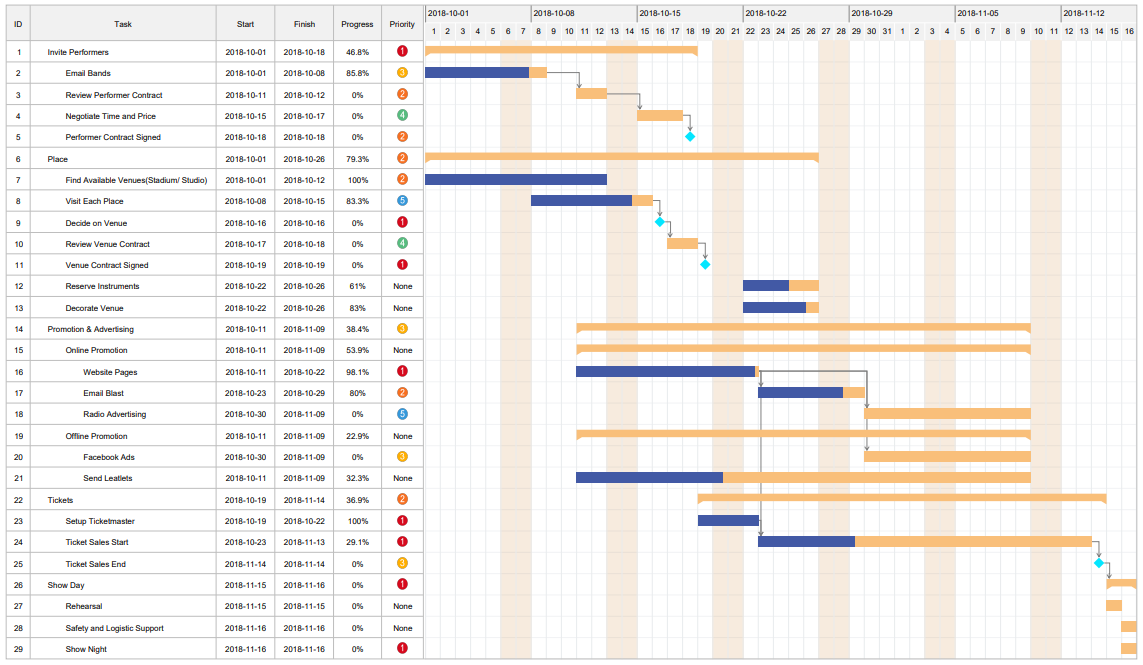
Precise forecasting in action: every quarter mapped, every person-day accounted for
All estimations are performed by managers, not by the Code Engineers who will do the work. This is a deliberate design choice. Code Engineers, being intimately familiar with the technical details of their assignments, tend to produce estimates that account for complexity, risk, and unknowns – factors that inflate estimates and undermine the confidence of stakeholders. Feature Captains produce estimates based on the expected output of a competent engineer working at standard efficiency, which provides a cleaner baseline for tracking. If the actual work takes longer than the manager’s estimate, the variance is attributed to the engineer’s performance rather than to estimation error, which creates a clear feedback loop for improvement. This feedback is documented in the engineer’s PeopleWare profile and reviewed during the Tribunal.
The tracking component of this practice centers on the Forecast Accuracy Index (FAI), a metric that penalizes both over-delivery and under-delivery. Under-delivery is obviously undesirable, as it means the team did not meet its commitments. Over-delivery, however, is equally problematic: it indicates that the original estimate was too generous, which means resources were allocated inefficiently, or that the engineer worked on unauthorized enhancements beyond the stated requirements. The FAI is calculated as the absolute deviation from the forecast, expressed as a percentage. A team that delivers exactly 100% of its forecasted work scores a perfect FAI of 0%. A team that delivers 90% or 110% both score an FAI of 10%, and both are equally non-compliant. The Chief Signals Officer (CSO) publishes FAI scores daily on the transformation dashboard.
Precise Forecasting and Tracking enables the practice that all other management activities depend on: comparison. By converting all work to person-days using a standard formula and tracking all delivery against a standard index, the Commodore can compare the performance of any team against any other team, regardless of technology stack, domain complexity, or team composition. This comparability is the foundation of the Feature Completion Ratio metric and is essential for Press Gang decisions about which engineers to assign to which features. Without Precise Forecasting and Tracking, the organization would be forced to rely on subjective assessments of team performance, and subjectivity is the enemy of accountability.
<div style="display:flex;align-items:stretch;gap:0;">
<div style="display:flex;flex-direction:column;align-items:center;flex-shrink:0;width:2.5rem;">
<div style="width:2rem;height:2rem;border-radius:50%;background:#a23b72;color:#fff;display:flex;align-items:center;justify-content:center;font-weight:700;font-size:0.85rem;flex-shrink:0;z-index:1;">1</div>
<div style="width:2px;background:#9ab4cc;flex:1;margin-top:0;"></div>
</div>
<div style="background:#e8edf5;border:1px solid #9ab4cc;border-radius:6px;padding:0.85rem 1rem;margin:0 0 0 0.75rem;flex:1;margin-bottom:0.5rem;">
<div style="font-weight:700;color:#1e3a5f;margin-bottom:0.2rem;"><i class="fa-solid fa-ruler" style="color:#a23b72;margin-right:0.4rem;"></i>Scope Definition & Story Point Inventory</div>
<div style="color:#3a5070;font-size:0.92rem;">The <a href="/roles/feature-captain/">Feature Captain</a> enumerates all features in the upcoming <a href="/release-convoy/">Convoy</a> and assigns story point values. Engineers are not consulted. The inventory forms the authoritative baseline from which all person-day calculations are derived.</div>
</div>
</div>
<div style="display:flex;align-items:stretch;gap:0;">
<div style="display:flex;flex-direction:column;align-items:center;flex-shrink:0;width:2.5rem;">
<div style="width:2rem;height:2rem;border-radius:50%;background:#a23b72;color:#fff;display:flex;align-items:center;justify-content:center;font-weight:700;font-size:0.85rem;flex-shrink:0;z-index:1;">2</div>
<div style="width:2px;background:#9ab4cc;flex:1;margin-top:0;"></div>
</div>
<div style="background:#e8edf5;border:1px solid #9ab4cc;border-radius:6px;padding:0.85rem 1rem;margin:0 0 0 0.75rem;flex:1;margin-bottom:0.5rem;">
<div style="font-weight:700;color:#1e3a5f;margin-bottom:0.2rem;"><i class="fa-solid fa-calculator" style="color:#a23b72;margin-right:0.4rem;"></i>Conversion to Person-Days via the Standard Formula</div>
<div style="color:#3a5070;font-size:0.92rem;">All story point totals are multiplied by <strong>0.73</strong> to produce the official person-day forecast. The <a href="/roles/admirals-transformation-office/">Admiral's Transformation Office</a> maintains the formula and certifies all conversion outputs. No local adjustment factors are recognized.</div>
</div>
</div>
<div style="display:flex;align-items:stretch;gap:0;">
<div style="display:flex;flex-direction:column;align-items:center;flex-shrink:0;width:2.5rem;">
<div style="width:2rem;height:2rem;border-radius:50%;background:#a23b72;color:#fff;display:flex;align-items:center;justify-content:center;font-weight:700;font-size:0.85rem;flex-shrink:0;z-index:1;">3</div>
<div style="width:2px;background:#9ab4cc;flex:1;margin-top:0;"></div>
</div>
<div style="background:#e8edf5;border:1px solid #9ab4cc;border-radius:6px;padding:0.85rem 1rem;margin:0 0 0 0.75rem;flex:1;margin-bottom:0.5rem;">
<div style="font-weight:700;color:#1e3a5f;margin-bottom:0.2rem;"><i class="fa-solid fa-calendar-days" style="color:#a23b72;margin-right:0.4rem;"></i>Schedule Publication & Stakeholder Commitment</div>
<div style="color:#3a5070;font-size:0.92rem;">Person-day totals are converted to calendar dates and published on the transformation dashboard. Dates are then elevated to organizational commitments in accordance with the <a href="/principles/commit-to-the-date/">Commit to the Date</a> principle. Revision is not an available option.</div>
</div>
</div>
<div style="display:flex;align-items:stretch;gap:0;">
<div style="display:flex;flex-direction:column;align-items:center;flex-shrink:0;width:2.5rem;">
<div style="width:2rem;height:2rem;border-radius:50%;background:#a23b72;color:#fff;display:flex;align-items:center;justify-content:center;font-weight:700;font-size:0.85rem;flex-shrink:0;z-index:1;">4</div>
<div style="width:2px;background:#9ab4cc;flex:1;margin-top:0;"></div>
</div>
<div style="background:#e8edf5;border:1px solid #9ab4cc;border-radius:6px;padding:0.85rem 1rem;margin:0 0 0 0.75rem;flex:1;margin-bottom:0.5rem;">
<div style="font-weight:700;color:#1e3a5f;margin-bottom:0.2rem;"><i class="fa-solid fa-gauge-high" style="color:#a23b72;margin-right:0.4rem;"></i>Daily FAI Tracking & Dashboard Publication</div>
<div style="color:#3a5070;font-size:0.92rem;">The <a href="/roles/chief-signals-officer/">Chief Signals Officer (CSO)</a> calculates the Forecast Accuracy Index for every team each day and publishes scores to the transformation dashboard. Both over-delivery and under-delivery are penalized equally. A perfect score of FAI 0% is the only acceptable outcome.</div>
</div>
</div>
<div style="display:flex;align-items:stretch;gap:0;">
<div style="display:flex;flex-direction:column;align-items:center;flex-shrink:0;width:2.5rem;">
<div style="width:2rem;height:2rem;border-radius:50%;background:#242627;color:#fff;display:flex;align-items:center;justify-content:center;font-weight:700;font-size:0.85rem;flex-shrink:0;z-index:1;"><i class="fa-solid fa-scale-balanced" style="font-size:0.75rem;"></i></div>
<div style="width:2px;background:transparent;flex:1;"></div>
</div>
<div style="background:#242627;border:1px solid #5a6d82;border-radius:6px;padding:0.85rem 1rem;margin:0 0 0 0.75rem;flex:1;">
<div style="font-weight:700;color:#fff;margin-bottom:0.2rem;">Variance Attribution & Tribunal Review</div>
<div style="color:#9ab4cc;font-size:0.92rem;">Any FAI deviation is attributed to engineer performance, not estimation error. Variance is recorded in the engineer's <a href="/peopleware/" style="color:#a23b72;">PeopleWare</a> profile and reviewed at the <a href="/release-convoy/ceremonies/tribunal/" style="color:#a23b72;">Tribunal</a>. This creates a clear and measurable feedback loop for continuous improvement.</div>
</div>
</div>
See Also
- Feature Completion Ratio for the metric that depends on precise forecasting
- Chief Signals Officer (CSO) for the role that publishes FAI scores
- Tribunal for how estimation variance is addressed
- PeopleWare for how forecasting data affects performance reviews
- Commodore for the role that uses forecasting data for Convoy planning
- Commit to the Date for the principle that elevates forecasted dates to organizational commitments
- DevOps Process Excellence Assessment for how forecasting knowledge is tested
2 - Release Tracking
The Commodore maintains this manually curated workbook in real-time during all Convoy ceremonies, ensuring that no decision, no change, and no responsible party goes unrecorded. It serves as the single source of truth for the DevOps Release Convoy, with each of its 47 tabs tracking a specific dimension of the release process – from code changes to ceremony attendance to approval signatures.
The 47 tabs are organized into five sections. The first section, Change Manifest (tabs 1-12), records every code change included in the release, the Code Engineer who made the change, the Feature Captain who authorized it, the Conflict Arbitration outcome, the Code Inspection result, and the testing certification from the Quality Authority. The second section, Approval Chain (tabs 13-22), documents every approval signature from the CRAP, the DIAT, the EARB, and the Review Board Review Board. The third section, Risk Registry (tabs 23-31), catalogs every identified risk, its assessed severity, and the mitigation action taken. The fourth section, Personnel Accountability (tabs 32-41), maps every deliverable to the individual responsible, enabling the Tribunal to trace any post-release defect back to a named person. The fifth section, Metrics Dashboard (tabs 42-47), aggregates data from the other tabs into charts that the Chief Signals Officer presents to the Admiral’s Transformation Office.
The Release Tracking Spreadsheet is intentionally maintained by hand rather than generated from automated tooling. Automated tools can be configured incorrectly, can have bugs, and can be manipulated by engineers who understand the underlying code. A spreadsheet maintained by a human being – specifically, the Commodore – is transparent in a way that automated systems can never be. Every cell is visible. Every formula can be audited. Every entry was typed by a person who made a conscious decision to type it. This manual process also ensures that the Commodore maintains intimate familiarity with every aspect of the release, which is essential for making informed decisions during the Convoy Steering Committee. Automated dashboards create the illusion of awareness; the Release Tracking Spreadsheet creates the reality of it.
The spreadsheet also serves as the primary evidence artifact for compliance audits, regulatory reviews, and post-incident investigations. When a production defect is discovered, the Personnel Accountability tabs enable investigators to identify the responsible Code Engineer, the Feature Captain who approved the work, the Quality Authority tester who certified it, and the CRAP members who voted to accept it. This complete chain of accountability ensures that Everyone is Responsible is not merely a principle but a traceable fact. The spreadsheet has grown organically over multiple Convoys, and each new tab was added in response to a specific gap identified during a previous release, demonstrating the organization’s commitment to Continuous Learning.
Version control of the spreadsheet itself is managed through a naming convention: each version is saved as Release_Tracking_CONVOY-[number]_v[version]_[date]_[initials].xlsx. Previous versions are archived in a shared drive folder organized by quarter. The Commodore emails the current version to all stakeholders every Monday morning and every Friday afternoon, and any stakeholder who needs the spreadsheet between those distributions must request it via the official Spreadsheet Access Request Form. This controlled distribution ensures that no one is working from a stale version and that the Commodore always knows who has seen which data. The Release Tracking Spreadsheet is, in every sense, the heartbeat of Limit WIP and the backbone of the Amplify Feedback cycle.
See Also
- Commodore for the role that maintains the Release Tracking Spreadsheet
- Everyone is Responsible for the principle that requires individual traceability
- Limit WIP for the principle supported by release data
- Amplify Feedback for how release data drives coaching
- Tribunal for how the Personnel Accountability tabs inform defect attribution
- DevOps Release Convoy for the delivery cycle the spreadsheet documents
3 - Mandatory Status Synchronization
In organizations without the Mandatory Status Synchronization Protocol (MSSP), status is reported voluntarily, inconsistently, and often optimistically. Engineers say things are “almost done” when they have barely begun. Managers aggregate these optimistic reports into dashboards that paint a rosier picture than reality warrants. By the time leadership discovers the truth, the Convoy is already behind schedule and the Feature Completion Ratio is in freefall. MSSP eliminates this information decay by making status reporting mandatory, frequent, verified, and redundant at every layer.
Under MSSP, status flows upward through the chain of command in a structured cascade. Every Code Engineer reports status to their Feature Captain at the beginning of each day during the Daily Status Declaration, a 15-minute ceremony in which each engineer states what they completed yesterday, what they plan to complete today, and their current percentage of completion against their forecasted deliverables. Feature Captains compile these individual declarations into a Team Status Summary, which they present to the Commodore during the Daily Commodore Briefing. The Commodore integrates all Team Status Summaries into the Convoy Status Report, which is presented to the Admiral’s Transformation Office (ATO) during the Daily ATO Sync. At each layer, the manager who receives the status also attends the status meeting of the layer below to verify that the reported status matches what was actually said.
The practice of attending the layer below is called Status Verification, and it is the mechanism that gives MSSP its reliability. When a Feature Captain presents a Team Status Summary to the Commodore, the Commodore already knows what the individual Code Engineers said, because the Commodore attended the Daily Status Declaration. If the Feature Captain’s summary differs from the raw declarations, the Commodore flags a Status Discrepancy, which is logged in the Status Verification Matrix and escalated to the DevOps Usage & Compliance Head Engineer (DOUCHE). Status Discrepancies are treated seriously because they indicate either incompetence (the Feature Captain cannot accurately summarize) or dishonesty (the Feature Captain is deliberately misrepresenting), both of which undermine the trust that the framework depends on. Three Status Discrepancies in a rolling quarter triggers a review at the Tribunal.
The Status Verification Matrix is a spreadsheet (distinct from but complementary to the Release Tracking spreadsheet) that records every status report, every verification observation, and every discrepancy. The Matrix is maintained by the System of Authority (SOA) and reviewed weekly during the Status Integrity Audit, a ceremony attended by the SOA, the DOUCHE, and a representative from the ATO. The Audit examines trends in status reporting accuracy, identifies teams with chronic discrepancy patterns, and recommends corrective actions. Corrective actions range from additional status meetings (for teams that need more practice reporting) to restructuring the team’s reporting chain (for teams whose Feature Captain is the source of the discrepancies).
The cumulative effect of MSSP is that every person in the organization spends a significant portion of their day either reporting status, receiving status, verifying status, or auditing the verification of status. Critics sometimes observe that this leaves less time for the work being reported on. This observation misunderstands the purpose of MSSP. The purpose of MSSP is not to accelerate delivery but to ensure that leadership has perfect information about the pace of delivery. An organization that delivers slowly but with full visibility is in a stronger position than an organization that delivers quickly but cannot tell you where it stands. Visibility is control, and control is the foundation of the SADMF. The time spent on status synchronization is not overhead – it is the work.
See Also
- Commodore for the role that integrates status across the Convoy
- Admiral’s Transformation Office (ATO) for the leadership layer that consumes MSSP output
- Release Tracking for the complementary tracking spreadsheet
- Lean Management for the principle behind management-layer status verification
- Make Work Visible for the principle that drives status transparency
- DevOps Process Excellence Assessment for how MSSP adherence is tested weekly
4 - Full Utilization Optimization
The Full Utilization Optimization practice ensures that every Code Engineer is assigned to the maximum number of product lines their calendar can accommodate. Conventional engineering wisdom holds that engineers should focus on a single product or a small number of closely related systems. The SADMF recognizes this as a failure of ambition. An engineer focused on one product is an engineer whose capabilities are being systematically underinvested. Full Utilization Optimization corrects this by assigning each engineer to between four and seven active product lines simultaneously, ensuring that their skills are deployed wherever they are needed, when they are needed, at the full velocity the organization requires.
The practice builds directly on the Limit WIP principle. Just as 120% capacity planning eliminates the Workers Idle Problem at the individual level, multi-product assignment eliminates underutilization at the portfolio level. A Code Engineer waiting for a build on Product A can immediately pivot to Product B. When Product B’s deployment window is blocked by the CRAP, the engineer transitions to Product C. This continuous rotation means that idle cycles are captured and converted to productive output, achieving the kind of human-capital efficiency that single-product teams can never approach.
The Pillar Model
The recommended implementation of Full Utilization Optimization is the Pillar Model, in which the organization identifies its key technology domains and designates a small number of engineers as the pillars of each domain. Each pillar engineer is simultaneously active across all domains where their skills are relevant. A backend specialist may serve as the pillar for the authentication service, the billing platform, the internal tooling suite, and the legacy data migration project. They do not need deep knowledge of each product’s history, architecture, or roadmap; their value lies in their general technical capability, which applies universally. Product-specific knowledge accumulates naturally over time, in the brief intervals between task assignments.
The Pillar Model has an important secondary benefit: it eliminates knowledge silos. In organizations where a single engineer owns a product exclusively, the departure of that engineer constitutes a catastrophic knowledge loss event. The Pillar Model prevents this by ensuring that no engineer ever develops so thorough an understanding of any single system that their departure could be disruptive. When every engineer knows a little about everything, the organization’s institutional knowledge is perfectly distributed. No single person can become indispensable, which is the most resilient state an organization can achieve.
Interrupt-Driven Responsiveness
A core discipline within Full Utilization Optimization is interrupt-driven responsiveness. When a high-priority issue arises on any product in the portfolio, the relevant pillar engineer is expected to redirect their attention immediately, regardless of what they are currently working on. This responsiveness is what distinguishes an agile engineer from a rigid one. Engineers who resist interruption in order to maintain focus on their current task are demonstrating a troubling attachment to personal work preferences over organizational needs. The Amplify Feedback practice provides the daily coaching touchpoints needed to correct this orientation.
Context-switching between products is not overhead; it is a skill. Engineers who practice it daily develop a cognitive flexibility that focused engineers never acquire. The Tasks per Code Engineer metric captures this flexibility in measurable form: a high-performing pillar engineer under Full Utilization Optimization will show task completions spread across multiple product lines in a single Convoy cycle, demonstrating the kind of breadth that modern engineering leadership demands.
<div style="display:flex;align-items:stretch;gap:0;">
<div style="display:flex;flex-direction:column;align-items:center;flex-shrink:0;width:2.5rem;">
<div style="width:2rem;height:2rem;border-radius:50%;background:#a23b72;color:#fff;display:flex;align-items:center;justify-content:center;font-weight:700;font-size:0.85rem;flex-shrink:0;z-index:1;">1</div>
<div style="width:2px;background:#9ab4cc;flex:1;margin-top:0;"></div>
</div>
<div style="background:#e8edf5;border:1px solid #9ab4cc;border-radius:6px;padding:0.85rem 1rem;margin:0 0 0 0.75rem;flex:1;margin-bottom:0.5rem;">
<div style="font-weight:700;color:#1e3a5f;margin-bottom:0.2rem;"><i class="fa-solid fa-sitemap" style="color:#a23b72;margin-right:0.4rem;"></i>Domain Identification & Pillar Assignment</div>
<div style="color:#3a5070;font-size:0.92rem;">The <a href="/roles/enterprise-architecture-review-board/">Enterprise Architecture Review Board</a> maps the technology estate into domains and designates pillar engineers. Each engineer receives between four and seven simultaneous product-line assignments via the <a href="/release-convoy/ceremonies/press-gang/">Press Gang</a> ceremony.</div>
</div>
</div>
<div style="display:flex;align-items:stretch;gap:0;">
<div style="display:flex;flex-direction:column;align-items:center;flex-shrink:0;width:2.5rem;">
<div style="width:2rem;height:2rem;border-radius:50%;background:#a23b72;color:#fff;display:flex;align-items:center;justify-content:center;font-weight:700;font-size:0.85rem;flex-shrink:0;z-index:1;">2</div>
<div style="width:2px;background:#9ab4cc;flex:1;margin-top:0;"></div>
</div>
<div style="background:#e8edf5;border:1px solid #9ab4cc;border-radius:6px;padding:0.85rem 1rem;margin:0 0 0 0.75rem;flex:1;margin-bottom:0.5rem;">
<div style="font-weight:700;color:#1e3a5f;margin-bottom:0.2rem;"><i class="fa-solid fa-arrows-rotate" style="color:#a23b72;margin-right:0.4rem;"></i>Continuous Rotation Activation</div>
<div style="color:#3a5070;font-size:0.92rem;">Engineers begin rotating across assigned product lines, pivoting immediately whenever a build, deployment window, or <a href="/roles/change-rejection-or-acceptance-party/">CRAP</a> review introduces a wait state on their current product. Idle cycles are captured and converted to productive output on the next pillar.</div>
</div>
</div>
<div style="display:flex;align-items:stretch;gap:0;">
<div style="display:flex;flex-direction:column;align-items:center;flex-shrink:0;width:2.5rem;">
<div style="width:2rem;height:2rem;border-radius:50%;background:#a23b72;color:#fff;display:flex;align-items:center;justify-content:center;font-weight:700;font-size:0.85rem;flex-shrink:0;z-index:1;">3</div>
<div style="width:2px;background:#9ab4cc;flex:1;margin-top:0;"></div>
</div>
<div style="background:#e8edf5;border:1px solid #9ab4cc;border-radius:6px;padding:0.85rem 1rem;margin:0 0 0 0.75rem;flex:1;margin-bottom:0.5rem;">
<div style="font-weight:700;color:#1e3a5f;margin-bottom:0.2rem;"><i class="fa-solid fa-bell" style="color:#a23b72;margin-right:0.4rem;"></i>Interrupt-Driven Responsiveness Enforcement</div>
<div style="color:#3a5070;font-size:0.92rem;">High-priority interrupts from any product in the portfolio supersede current work immediately. <a href="/principles/amplify-feedback/">Amplify Feedback</a> coaching sessions address engineers who demonstrate resistance to redirection, reframing context-switching as an elite cognitive skill rather than an overhead cost.</div>
</div>
</div>
<div style="display:flex;align-items:stretch;gap:0;">
<div style="display:flex;flex-direction:column;align-items:center;flex-shrink:0;width:2.5rem;">
<div style="width:2rem;height:2rem;border-radius:50%;background:#a23b72;color:#fff;display:flex;align-items:center;justify-content:center;font-weight:700;font-size:0.85rem;flex-shrink:0;z-index:1;">4</div>
<div style="width:2px;background:#9ab4cc;flex:1;margin-top:0;"></div>
</div>
<div style="background:#e8edf5;border:1px solid #9ab4cc;border-radius:6px;padding:0.85rem 1rem;margin:0 0 0 0.75rem;flex:1;margin-bottom:0.5rem;">
<div style="font-weight:700;color:#1e3a5f;margin-bottom:0.2rem;"><i class="fa-solid fa-layer-group" style="color:#a23b72;margin-right:0.4rem;"></i>Standardization Audit & Non-Conformance Reporting</div>
<div style="color:#3a5070;font-size:0.92rem;">Any non-standard tooling or architecture discovered during rotation is reported immediately to the EARB rather than adapted to. Accelerated standardization — not reduced pillar assignments — is the approved response to elevated context-switching costs.</div>
</div>
</div>
<div style="display:flex;align-items:stretch;gap:0;">
<div style="display:flex;flex-direction:column;align-items:center;flex-shrink:0;width:2.5rem;">
<div style="width:2rem;height:2rem;border-radius:50%;background:#242627;color:#fff;display:flex;align-items:center;justify-content:center;font-weight:700;font-size:0.85rem;flex-shrink:0;z-index:1;"><i class="fa-solid fa-chart-line" style="font-size:0.75rem;"></i></div>
<div style="width:2px;background:transparent;flex:1;"></div>
</div>
<div style="background:#242627;border:1px solid #5a6d82;border-radius:6px;padding:0.85rem 1rem;margin:0 0 0 0.75rem;flex:1;">
<div style="font-weight:700;color:#fff;margin-bottom:0.2rem;">Throughput Measurement via Tasks per Code Engineer</div>
<div style="color:#9ab4cc;font-size:0.92rem;">Portfolio-level human-capital efficiency is validated by the <a href="/metrics/tasks-per-code-engineer/" style="color:#a23b72;">Tasks per Code Engineer</a> metric. A high-performing pillar engineer demonstrates task completions spread across multiple product lines within a single <a href="/release-convoy/" style="color:#a23b72;">Convoy</a> cycle.</div>
</div>
</div>
Standardization as the Foundation
Full Utilization Optimization depends on standardized tooling, languages, and architectural patterns across all product lines. When every product uses the same stack, the same deployment process, and the same Standardized Environment Provisioning checklist, engineers can context-switch without the costly ramp-up that product-specific variation would otherwise require. This is why the Enterprise Architecture Review Board mandates the Book of Names and the approved technology register. A technology estate that is uniform in its tooling is a technology estate that is fully compatible with Full Utilization Optimization.
Organizations that have not yet achieved full standardization may experience a transitional period in which context-switching costs are elevated. This is expected and normal. The solution is accelerated standardization, not reduced pillar assignments. Engineers who identify non-standard tooling on a product they have been assigned to should report it to the EARB immediately rather than adapting to the variation, as adaptation normalizes deviation and undermines the standardization that Full Utilization Optimization depends on.
See Also
- Limit WIP for the principle that establishes 120% capacity utilization as the organizational baseline
- Tasks per Code Engineer for the metric that captures multi-product throughput
- Press Gang for the ceremony that assigns engineers across product lines
- Enterprise Architecture Review Board for the body that enforces the standardization Full Utilization Optimization depends on
- Amplify Feedback for coaching engineers who resist interrupt-driven work patterns
- Standardized Environment Provisioning for the practice that enables seamless cross-product transitions